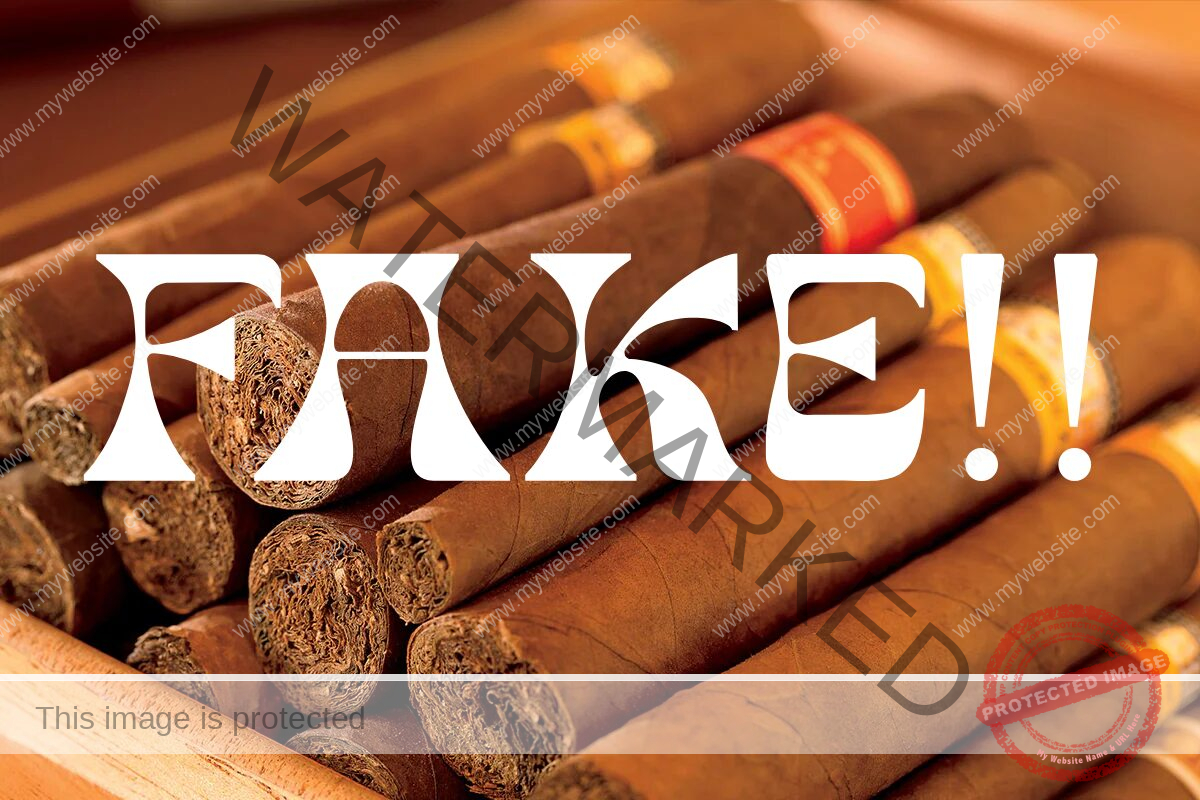
At La Saintos Cigars, we firmly believe that the ritual of lighting a true Cuban cigar is a moment of refined elegance — a time to relax, savor, and escape. But in today’s market, counterfeit Cuban cigars are an unfortunate reality, and without the right knowledge you risk compromising flavor, experience and even your health.
That’s why we’ve partnered exclusively with SS Alliance International — the authorized distributor of genuine Cuban cigar brands in Pakistan. Through this partnership, La Saintos Cigars guarantees authentic Cuban cigars, stored under optimal conditions, delivered with full provenance, and built around your perfect smoking time.
Why Authenticity Matters
Cuban cigars from brands such as Cohiba, Montecristo, Partagás and others carry centuries of heritage. Counterfeits may look similar—but they lack the craft, the consistent quality and the genuine taste. Worse as some fake “Cuban” cigars are made from factory-floor waste tobacco and may contain contaminants like hair or dust — posing serious health risks.
In Pakistan, the only recognized official distributor of Cuban cigars is SS Alliance International. Their website clearly states “Exclusive Distributor of Cuban Cigars in Pakistan. Through our alliance, La Saintos Cigars offers access to these authentic Cuban cigars—so you can smoke with confidence.
Key Checks Before You Buy
We’ve compiled a detailed checklist to help you identify fake Cuban cigars. Use this guide when purchasing, whether you’re buying to smoke at your preferred “smoking time” after a tiring workday or to enrich your collection.
1. Retailer & Distribution Chain
- Because SS Alliance is the exclusive distributor in Pakistan, only retailers authorized by them carry genuine stock. Premises listing SS Alliance’s “Official Retailers” label are trustworthy.
- At La Saintos Cigars, working directly through the authorized chain ensures you receive cigars from proper supply-lines, with full traceability.
2. Price Too Good to Be True
- Real Cuban cigars are premium items with costs tied to production, distribution and genuine origin. If a “Cuban” cigar is being sold at an unusually low price, alarm bells should ring.
- At La Saintos Cigars, our pricing reflects genuine provenance, storage and authenticity—so you’re not paying the hidden cost of risk.
3. Box & Packaging Authenticity
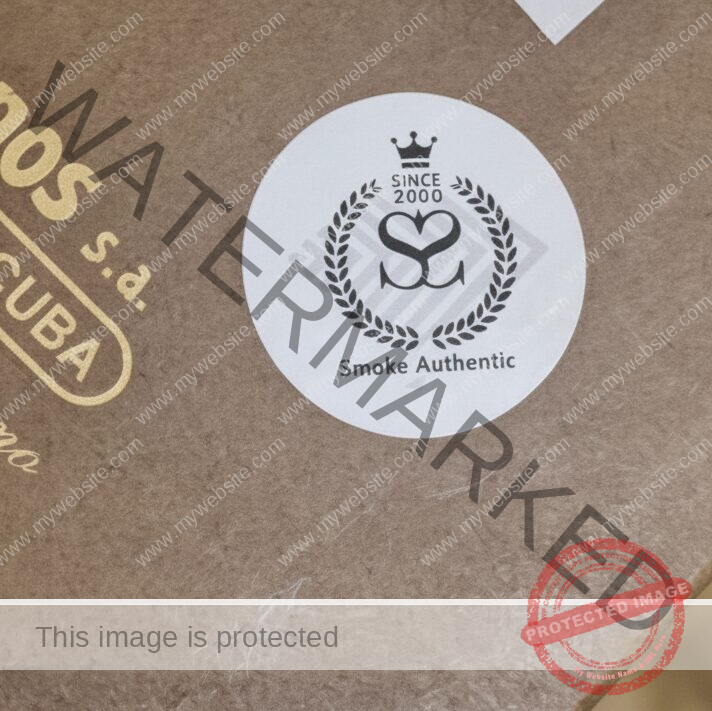
- The genuine Cuban cigar box will have its official seals, barcodes, and labels on the box (not tucked inside).
- Check for:
- The “Guarantee of Quality” sticker placed by the distributor.
- The white “Smoke Authentic” sticker at the bottom of the box.
- Clear, crisp printing, correct spelling, proper branding and security features.
4. Inspect the Cigar Itself
- Head / Cap: Real Cuban parejo cigars normally feature a three-seam cap. If it looks rough, uneven or simply too smooth, be cautious.
- Band & Wrapper Quality: Real bands have raised embossing, finer detail, holographic elements (depending on brand), and no bleeding of colours.
- Fill & Construction: Authentic cigars should feel evenly dense and well-filled when gently squeezed. If it’s soft, spongy or uneven, that’s a strong sign of fake.
5. Barcode & Verification
- Many genuine Cuban cigar boxes carry a barcode or seal you can check on Habanos.com (especially for recent productions).
6. Storage & Humidor Condition
- Even genuine cigars can suffer if stored improperly. Authentic Cuban cigars need appropriate humidity and temperature. At La Saintos Cigars, our walk-in humidor and storage monitoring meet premium standards — so your cigar smokes as it should.
How to Spot a Fake Cohiba Cigars?
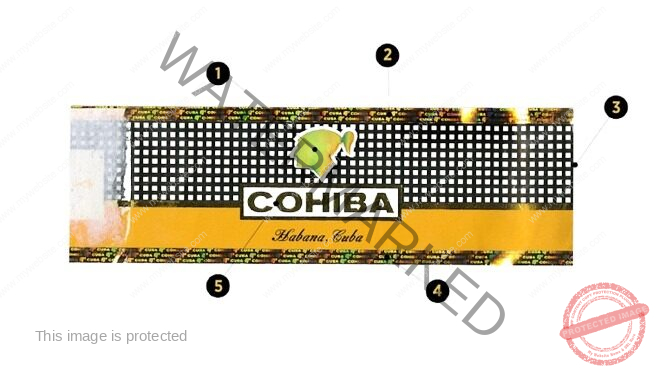
- Holographic Taino Indian Head
At the center of the band, you’ll find the signature holographic Taino Indian head. When viewed closely, you’ll notice a smaller Taino head embedded within the larger one — this “double-head” detail is a key marker of authenticity. - Holographic Details
Along the gilded upper edge of the band, holograms of the word “Cuba” and the Taino Indian head repeat in a continuous pattern. - Nine White Squares
From the reflective holographic gold top border down to the solid gold band covering the lower third, there are nine full rows of white squares arranged in a checkerboard pattern. Every square is complete — none should be clipped at the top or bottom. - Repeating Logos
Both the “Cuba” text and the Taino Indian head logos appear repeatedly along the holographic upper and lower gold borders. - Embossed Cohiba Lettering
The iconic “Cohiba” name, printed in white on a gold-bordered square, features raised, embossed lettering with a crisp metallic gold finish. This gold is reflective but not holographic.
How to Spot a Fake Cohiba Behike BHK?
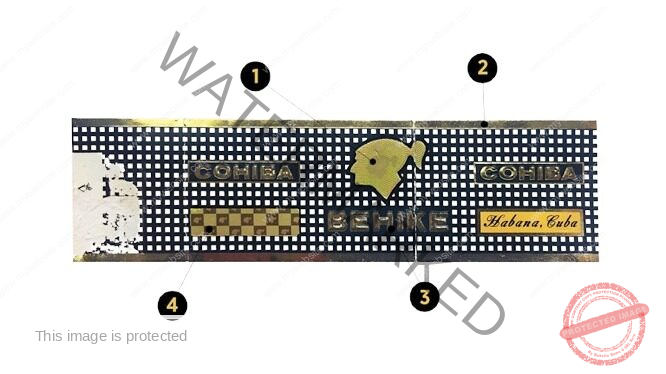
1. Holographic Taino Indian Head
The iconic Taino Indian head sits prominently at the center of the band as a hologram. When viewed closely, you’ll notice a smaller Taino head embedded within the larger one — this subtle “head-within-a-head” detail is a reliable sign of authenticity.
2. Holographic Elements
Along the gold-toned upper border, holographic repeats of the word “Cuba” and the Taino Indian head appear in a continuous pattern.
3. Nine White Squares
From the gold top edge down to the beginning of the word “Behike,” there are nine full rows of white squares laid out in a precise checkerboard design. Each square is complete — none should be clipped at the top or bottom.
4. Repeating Logos & Checkerboard Pattern
The gold foil box showcases a repeating checkerboard layout made up of holographic Taino Indian head logos alongside gold-framed boxes containing the words “Behike” and “Cohiba.”
How to Spot a Fake Bolivar?
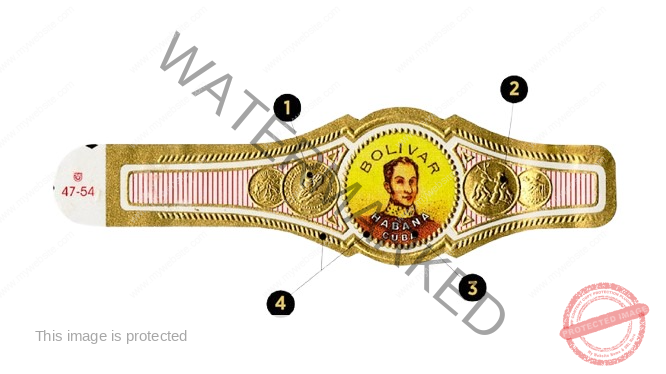
- Clear Detail on Embossed Coins
The two gold coins flanking the Bolívar logo should display sharp, well-defined detail. Examine them closely — the imagery should be crisp, with no blurriness, color bleeding, or irregularities in the patterns around the edges. Any smudging or distortion may indicate a counterfeit band. - Raised Coin Texture
The coins aren’t meant to be flat prints. When you run your finger over them, you should feel raised lines and ridges that outline the images. If the surface feels smooth with no texture, it’s a strong sign that the band is not genuine. - “Habana” & “Cuba” Text
Earlier Bolívar bands featured only the word “Habana.” Modern, authentic bands now display “Cuba” directly beneath it. This updated text is an important authenticity marker. - Raised Beaded Borders
Just like the embossed coins, the beaded borders around the central logo and along the edges of the band should have a tactile, raised feel. When you glide your finger over these areas, you should feel the individual bumps or ridges. A flat, textureless border often signals a counterfeit.
How to Spot a Fake Partagás?
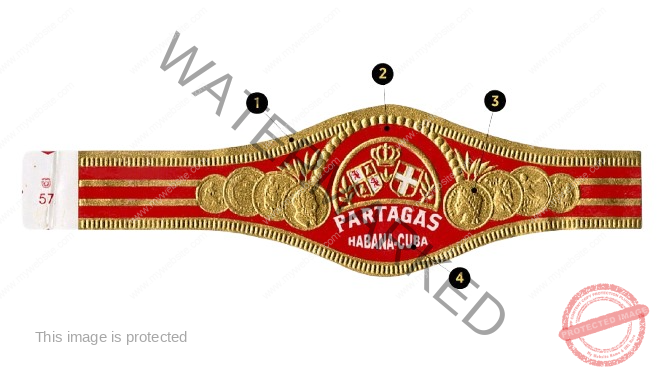
1. High-Quality Gilding
The gold border should catch the light with a clean, vibrant shine. When you run your finger along it, you’ll feel distinct raised notches — a hallmark of proper gilding on an authentic Partagás band.
2. Removal of “Cifuentes y Cia”
Before around 2007, the words “Cifuentes y Cia” appeared above the central emblem. On modern bands, this text has been removed. (An exception is the Partagás Culebras band, where the word “Culebras” is printed in this exact position.)
3. Raised, Detailed Coins
The gold coins positioned on either side of the central symbol are finely detailed and fully embossed. Their texture and precision should be clearly noticeable to both the eye and touch.
4. Clean, Well-Printed Text
The bright white lettering should appear sharp, with no bleeding into the surrounding red background. Pay attention to the serif-style font — each letter should be crisp, balanced, and well-defined.
How to Spot a Fake Montecristo?
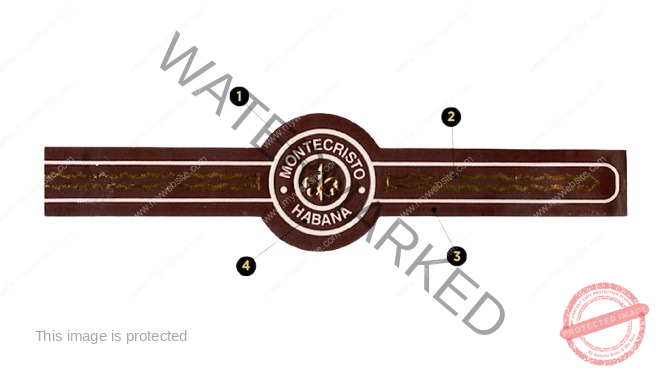
1. The Fleur-de-Lis
Since 2013, the central fleur-de-lis has been embossed in gold. When you run your finger over it, you should feel a raised texture. If the emblem feels completely flat, it’s a strong indicator that the band may be counterfeit.
2. Gilded Lines
The wavy gold lines running horizontally across the band should match the fleur-de-lis in color and tone. However, unlike the fleur-de-lis, these lines are not embossed — they should appear flat to the touch.
3. The Brown Band
In 2007, the band’s color shifted to a deeper, richer brown with a warm, reddish tone — similar to the color of a coffee bean. Modern bands also have a glossy finish. Counterfeits often mimic the older pre-2007 look, using a lighter, milk-chocolate brown or even a matte greenish tint.
4. White Circles
The white circles, double dots, and outer white borders beyond the gold lines should all be embossed, featuring a raised texture and a bright, consistent white color. Check for sharp, clean shapes — any fading, uneven edges, or irregular circles may indicate a fake.
How to Spot a Fake Romeo Y Julieta?
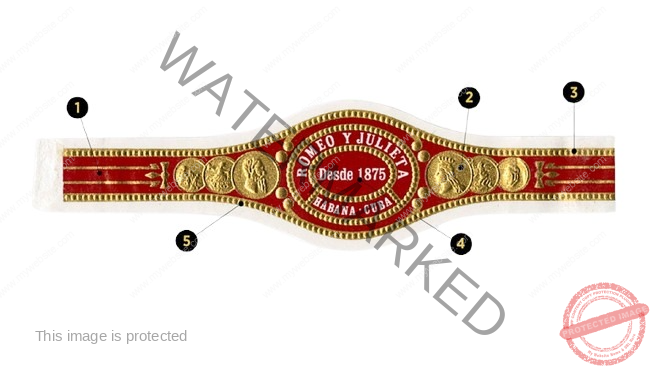
1. Lines to the Band’s Edge
The gold lines framed inside the textured gold border should reach all the way to the edge of the band. If these lines stop short and fail to connect with the end of the red background, it’s a likely sign of a counterfeit Romeo y Julieta band.
2. Clear Detail on Embossed Coins
The three gold coins on each side of the Romeo y Julieta logo should be embossed with precise, raised detail. Run your finger across them and examine them closely — the faces and outlines should appear sharp and well-defined. If any part feels flat or if the facial features look distorted, soft, or poorly stamped, the band is probably fake.
3. Embossed Borders
The gold beaded borders along the outer edges of the red background — as well as the oval shapes at the center of the logo — should have a noticeable raised texture. You should be able to feel these embossed details with your fingertips.
4. Lettering
Older Romeo y Julieta bands once featured the text “Rodríguez, Argüelles y Cia.” While some counterfeit bands still replicate this outdated wording, authentic modern bands display the brand name at the top, with “Habana · Cuba” beneath it, separated by a small white dot. At the center of the band, the text now reads “Desde 1875” (Since 1875).
5. Gold Beads on the Border
Inspect the gold beads that make up the border. They should be evenly spaced, with each bead clearly defined and uniformly embossed. Any irregular spacing, uneven texture, or poorly raised beads can indicate a fake band.
How to Spot a Fake Hoyo De Monterrey?
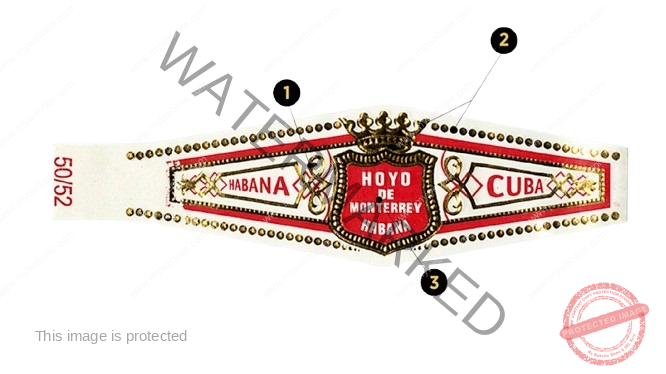
1. Embossed Scrolling
Both sides of the central logo feature decorative gold scrollwork. When you glide your fingers across these areas, you should feel a raised, embossed texture — a key detail of an authentic Hoyo de Monterrey band.
2. Embossed Gold Elements
The gold, dotted borders running along the top and bottom edges of the band are embossed and should feel textured to the touch. The ornate crown at the center of the logo is also raised, with noticeable depth and definition.
3. Embossed Lettering
The text “Hoyo de Monterrey” inside the central logo isn’t flat printing. The letters are embossed, allowing you to feel their raised surface when you run your fingers over them.
Why Choose La Saintos Cigars?
- Authenticity Guaranteed: Through our strategic partnership with SS Alliance International (the exclusive distributor of genuine Cuban cigars in Pakistan) we ensure every box is traceable and legitimate.
- Quality Storage: Your cigar deserves the right environment. We maintain premium humidors so that when you open the box for your post-work smoking ritual, the draw and flavour are perfect.
- Expert Guidance: We don’t just sell cigars—we educate. We’ll walk you through how to spot fakes, how to store your cigars, and how to choose the right smoking time.
Your Smoking Time, Elevated
Whether you’re lighting up at your preferred “smoking time” to unwind, to mark a success, or simply to enjoy a fine moment — do it with confidence, style and authenticity. With La Saintos Cigars and our partner SS Alliance International, you know you’re getting the real Cuba-crafted cigar experience.
 No products in the cart.